
DC/DC POWER SYSTEMS
Proprietary DC/DC architecture for critical power density.
Enteligent designs and delivers the conversion layer that DC power systems depend on.
WHY DC?
What 800VDC power unlocks?

High density AI data centers
The transition to 800VDC enables the shift to 1MW racks, and Enteligent's proprietary DC/DC architecture can further increase GPU density by up to 50%.

Off-grid capability
Solar generation, battery storage and charging load share one efficient DC electrical bus, providing power despite an inadequate or non-existent utility connection.

Microgrids
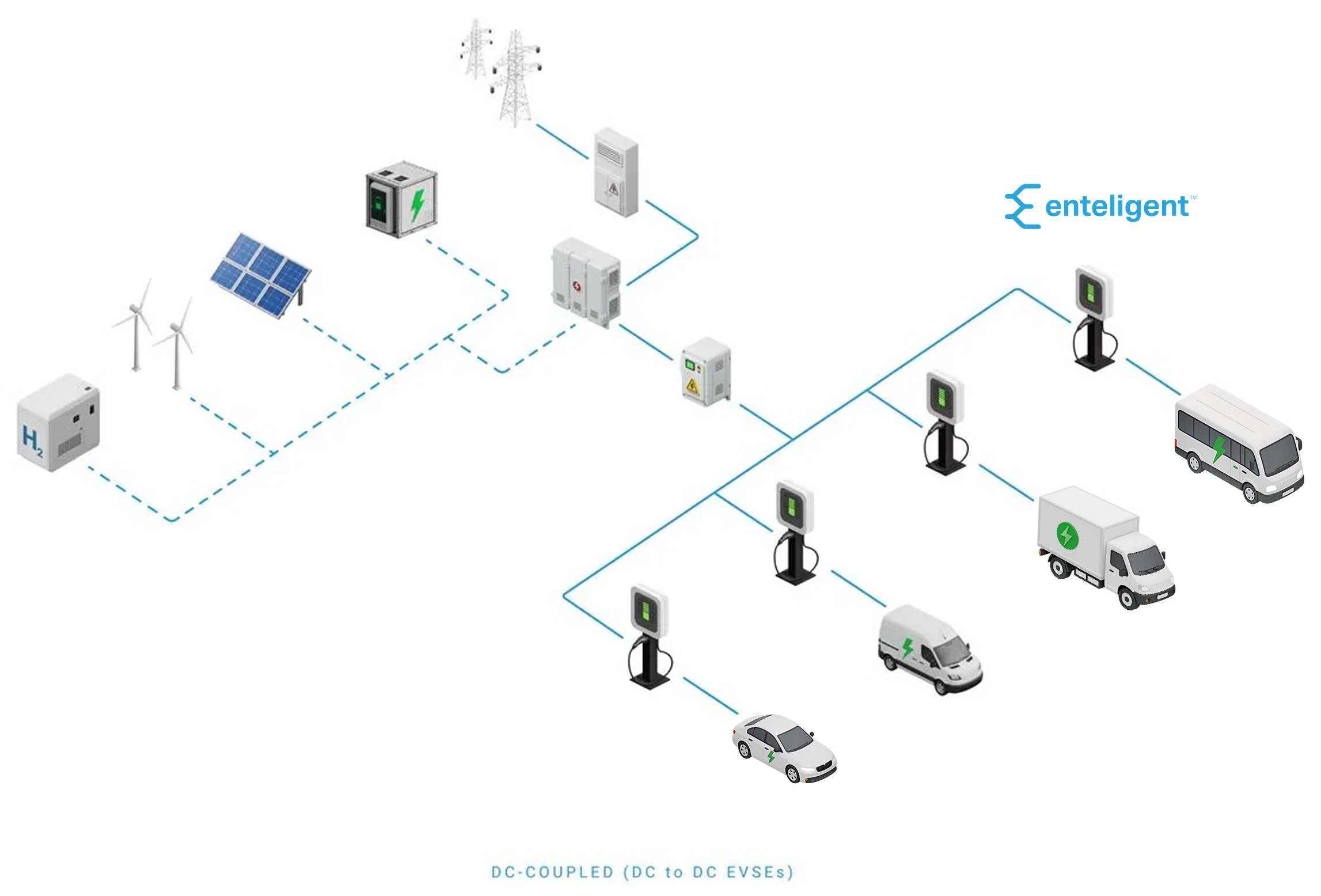
Solar, BESS, vehicles and the grid connect natively to the same DC bus, with no conversion between them and no synchronization to manage.

Efficiency and copper
Removing conversion stages delivers up to 20% higher efficiency and a 40% reduction in copper, along with eliminating the switchgear and electrical room space those stages required.
THE FORCING FUNCTION
Rack power grew 100x in seven years.
AI rack power density has climbed 100x in seven years, and it far exceeds what legacy AC electrical distribution can deliver.
The transition to the 800VDC-facility is happening.
Power per rack, NVIDIA reference architectures
kW per rack
FULL-RACK POWER ARCHITECTURE
Enteligent delivers DC/DC power conversion from grid to chip, enabling up to 50% greater compute density
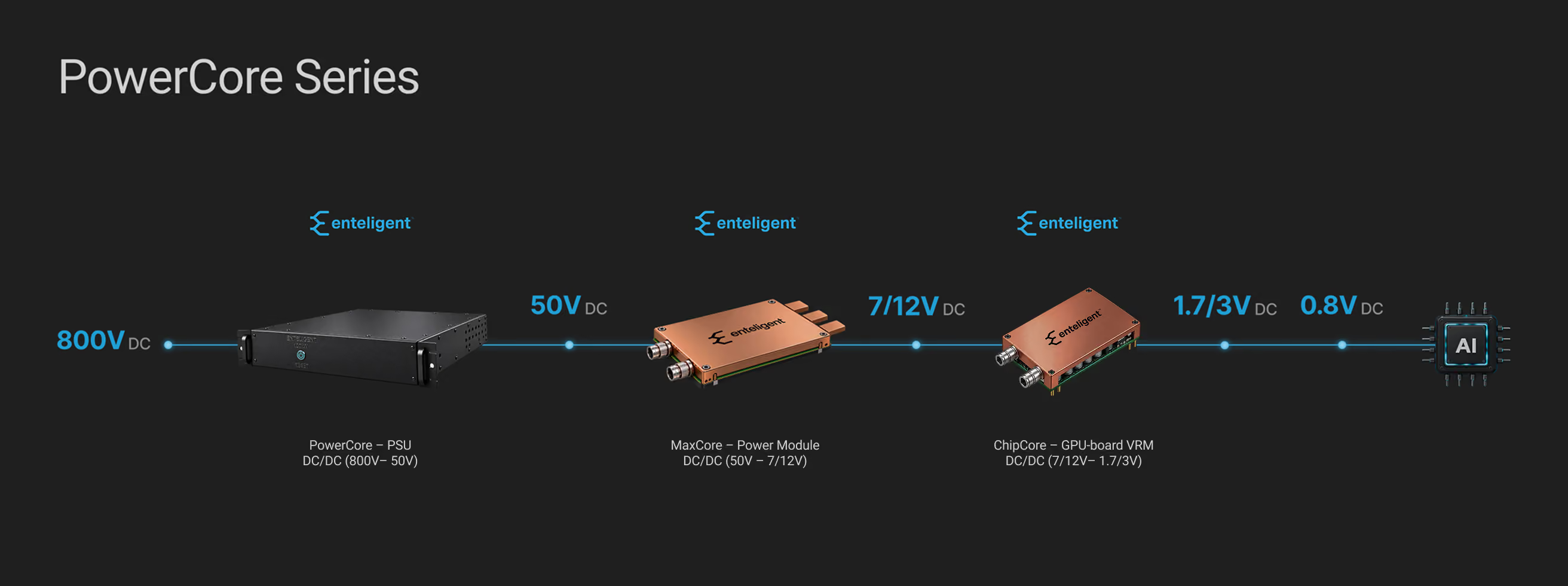

PowerCore stage 1 · PSU
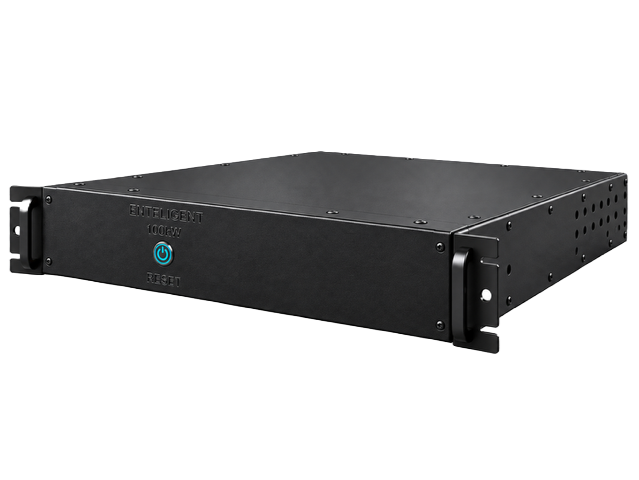
RackCore
800VDC to 50VDC
The rack Power Supply Unit (PSU) takes facility-level 800VDC to the 50VDC rack, managing AI-load transients without an in-rack supercapacitor or Battery Backup Shelf (BBS).
>97.6%
Module efficiency
800VDC
To 50VDC
1U/2U
Per server

Fixed output voltage with tight tolarence

Transient load response without a supercapacitor or BBU

1U Liquid Cooled, 2U Air Cooled

Digital control and adaptive firmware
.png)

PowerCore stage 2 · power module
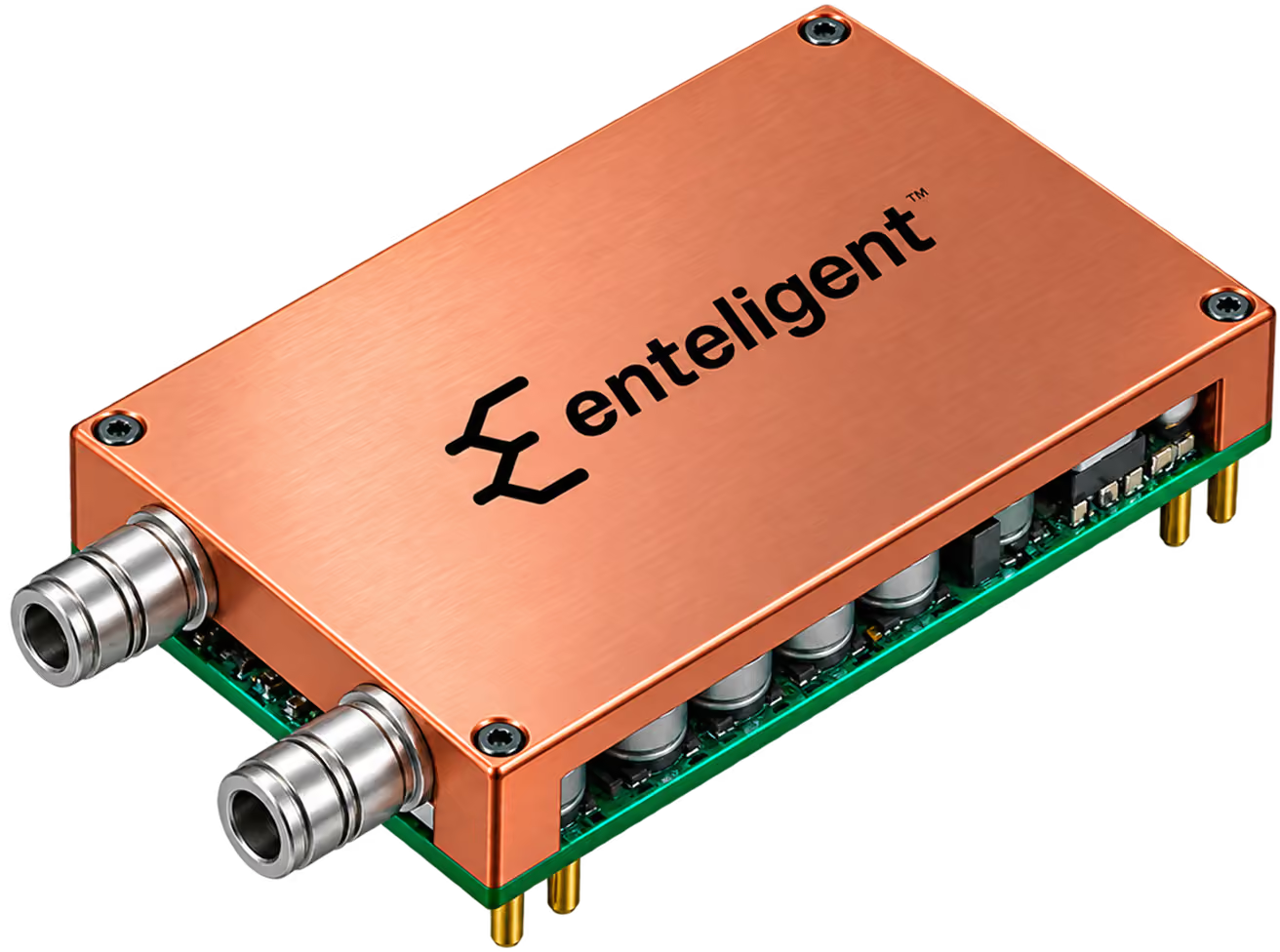
MaxCore
50VDC to the GPU board
The power module takes the 50 VDC rack down to 7/12 VDC at the GPU board point of load.
50VDC
Input rail
7/12VDC
At GPU board point of load
>97%
Module efficiency

7/12VDC to the GPU board point of load at 250A max

Voltage regulation at the point of load

Switching frequencies control EMI

Direct liquid cooling cold plate thermal management

PowerCore stage 3 · GPu Board VRM
ChipCore
GPU board 7-12VDC-1.7/3VDC
The VRM delivers a tight voltage regulation for high current demand for the processor or load.
7/12VDC
Input rail
1.7/3VDC
Main Board
2,500W
Peak Power
High density module >200W/in³

Direct access to cold plate

Delivering 1.7V/3VDC at the GPU/Main Board
Tight output regulation reduces the amount of capacitors on the processor board
WHAT THE AC ERA COSTS
RackCore enables up to 50% greater GPU density.
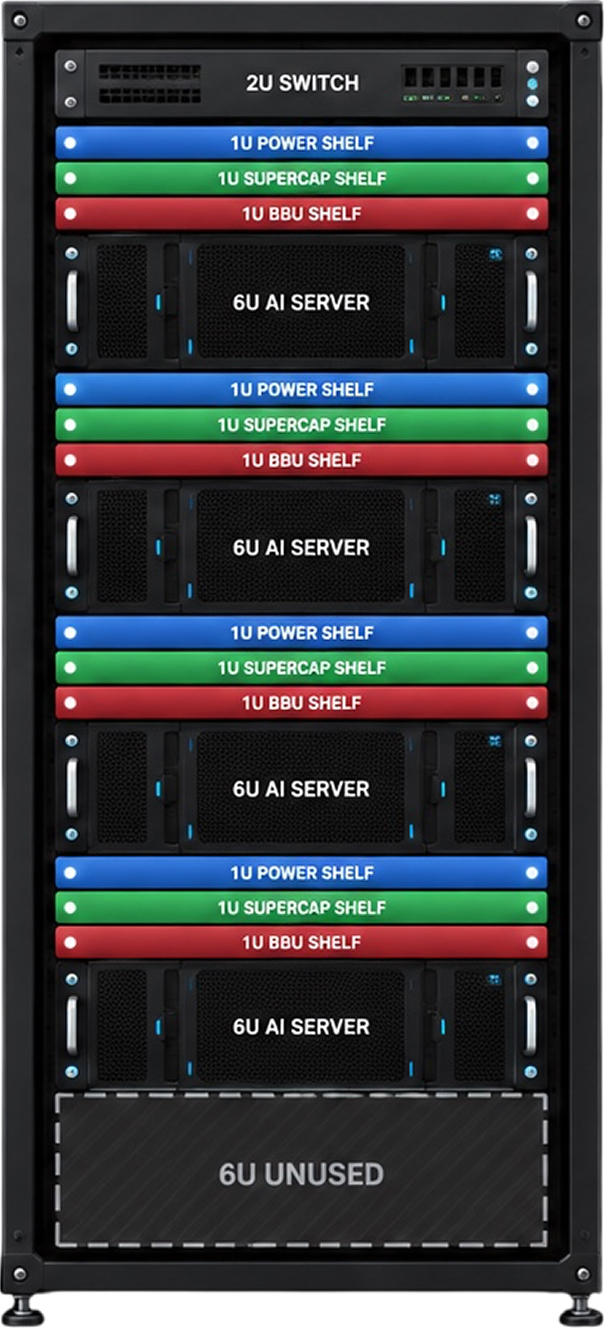
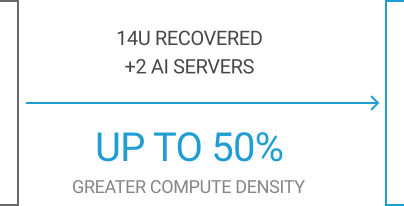
Other architectures need a supercapacitor shelf and a battery backup shelf to smooth GPU load transients, plus stranded units at the foot of the rack. RackCore holds the transient in the module itself, so those shelves come out. 14Us come back. At 7U per server and module pair, that is two more AI servers in the same 44U footprint, up to 50% more compute density.
44U RACK
Traditional DC PSUs
4 AI servers
44U RACK
DC native with RackCore
6 AI servers
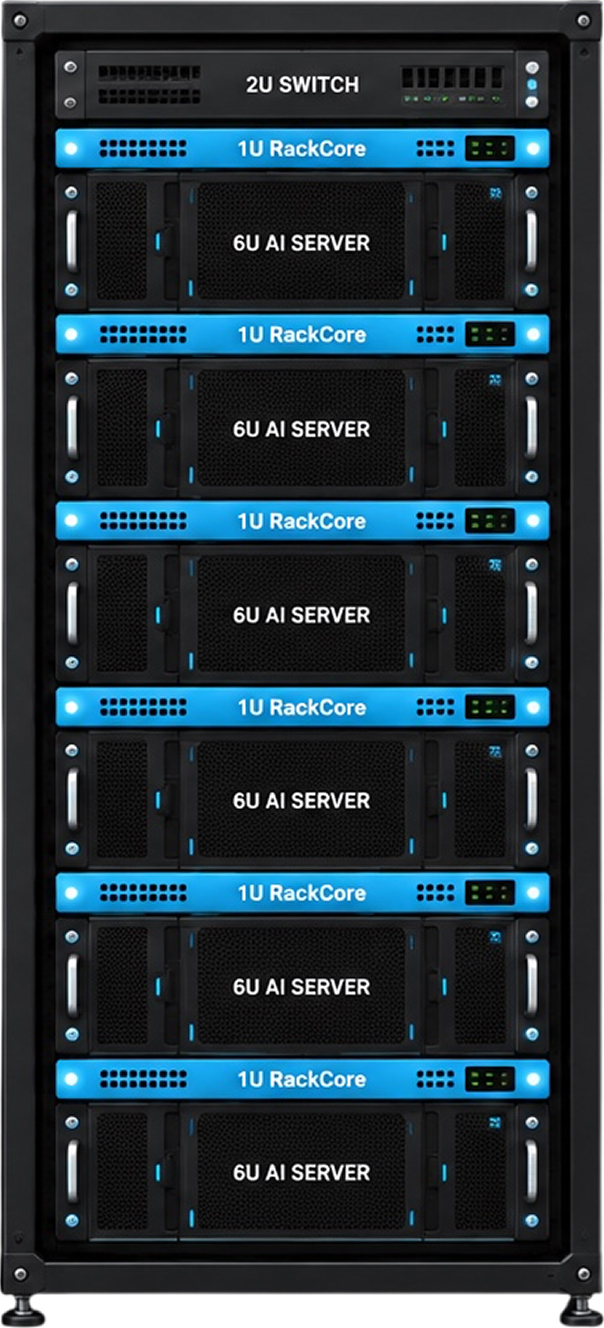
Both racks drawn to a common 44U scale. Traditional DC PSUs: 2U switch, four 1U power shelves and four 6U servers, an 8U supercapacitor and battery backup shelf, 6U stranded. DC native with RackCore: 2U switch and six pairs of one 1U RackCore module and one 6U server.
RackCore eliminates the need for an in-rack supercapacitor or battery backup unit, as the transients are handled inside the module.
Up to 50%
More compute density
14U
Recovered per 44U rack
0U
Supercapacitor shelf
0U
Battery backup shelf
EV CHARGER
A world-first DC/DC EV charging platform.
Certified, and running in customer sites with fleet, utility, municipal andcommercial customers across the United States and Europe. The same DC/DC platform runs thePowerCore series.
DC CHARGING BENEFITS
30%
Lower CAPEX
Simplified infrastructure, with no redundant AC conversions and no multiple interconnection points. Fewer inverters, fewer transformers and less costly trenching.
20%
Lower OPEX
Power moves directly from solar or battery storage to the vehicle, removing the more than 15% energy losses typically caused by AC to DC conversion and on-board vehicle inverters.
100%
Green off-grid and microgrids
Solar, BESS and the charger share one DC bus, so a depot can run off-grid or as amicrogrid rather than waiting on a feeder.
50%
Faster permitting and installation
No complex, long-lead AC infrastructure procurement cycles and fewer utility upgrades. Modular DC systems that are ready for your fleet sooner.
WHO IT IS FOR
Empowering everyone in the electrification ecosystem.
A DC bus directly connects the whole electrification chain rather than isolating the parties in it. The groups that gain most are the ones building off-grid sites, microgrids, and solar plus BESS installations, where every avoided conversion shows up directly in capital and operational costs.

Remote and off-grid locations
Charging at sites the grid underserves, running off on-site generation and storage instead of a feeder that does not exist.

Electric vehicle manufacturers
Direct DC delivery to the battery, bypassing the limits of the on-board converter.

Electrical equipment vendors
A DC/DC stage that drops onto an existing DC bus, or inside an existing microgrid or storage product.

Real estate owners and managers
More charging capacity from the connection a site already has, with solar and BESS carrying the rest.

Daily fleet owners and operators
Long-dwell and overnight depot charging that runs off on-site generation and storage, including where the grid connection is constrained or absent.
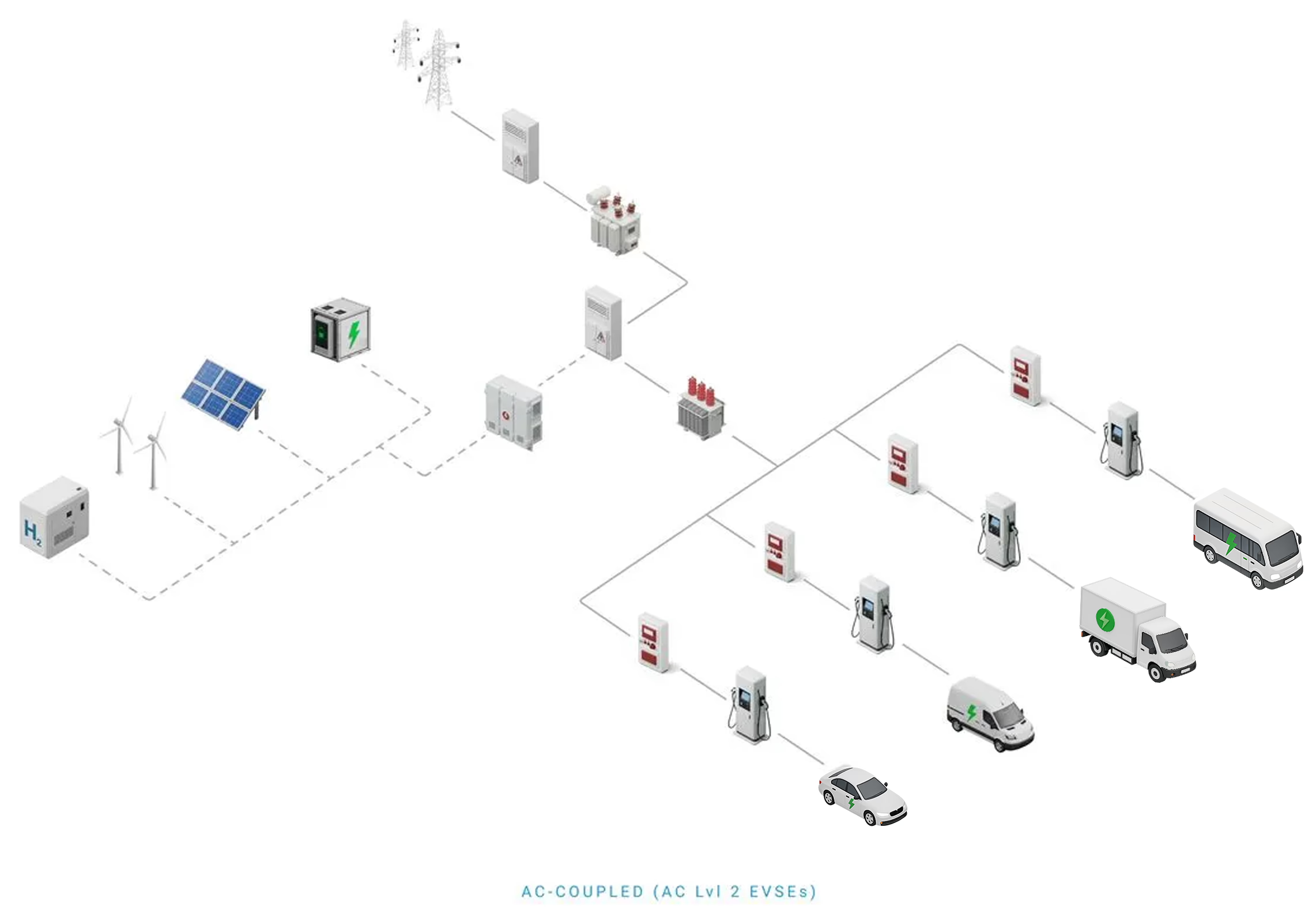
AC-coupled charging infrastructure
DC-coupled charging infrastructure
PERFORMANCE, SIMPLICITY, SUSTAINABILITY
Why choose Enteligent's DC/DC EV chargers?
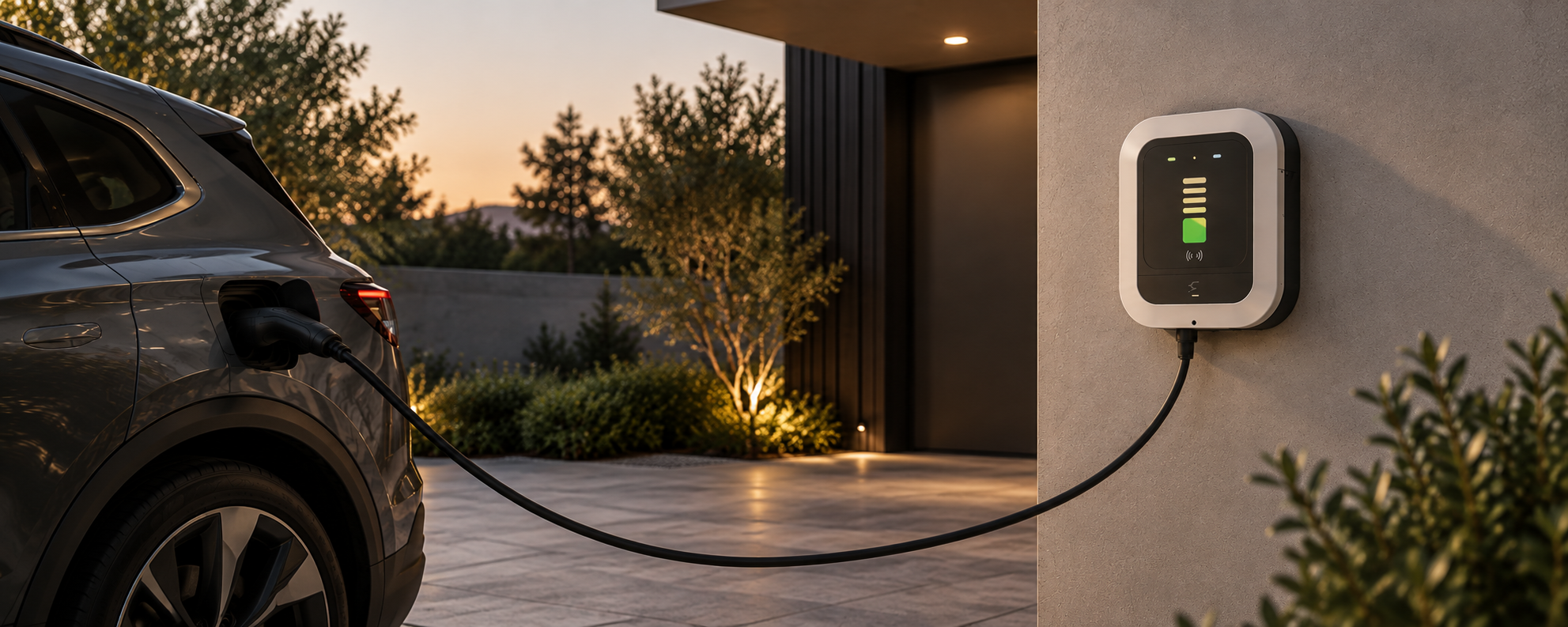
The LDF20 DC/DC EVSE is the charging solution for long-dwell or overnight charging for light and medium duty electric vehicles. It delivers high efficiency charging with minimal installation complexity.
The installed cost is where that shows up first: around 30% lower CAPEX and 50% faster permitting and installation, because most of the AC infrastructure simply is not there to buy, trench or wait for.
Lower installation cost
Fewer trenches, transformers and interconnection points cut civil and electrical work versus a comparable AC Level 2 installation.

Direct-to-battery DC charging
Sends all power straight to the vehicle's battery, removing the 15% energy loss common in AC Level 2 systems.
Compact and modular design
A single DC/DC module footprint scales from one charger to a full depot without redesigning the electrical room.
Optimized charging, smarter limits
Onboard controls manage current in real time, protecting the battery while charging at the fastest safe rate.
Seamless integration
Drops onto an existing 800VDC bus or DC microgrid alongside solar and storage with no extra conversion stage.
Certified and shipping
UL and CE certified, and already running in customer fleets since 2023.
Future-ready
Built on the same PowerCore DC/DC architecture that scales from EVSE to data center racks.
Bi-directional
Supports V2G and V2X power flow, so a parked fleet can return energy to the site or the grid.
DC POWER EXPERTISE
Full stack DC power engineering
Enteligent is a DC power product and solutions company. Itdesigns and delivers the DC/DC conversion layer for AI data centers and electric vehicle charging.

Engineered in-house
The engineering behind Enteligent's products is held in-house: power electronics, electrical and mechanical design, firmware, embedded software, AI and test. Thetransformer topology, the control architecture, the power controllers andthefirmware are designed by one team that carries a product from architecture through certification to volume production. That team is led byfour founders who have built and run DC power-system organizations together through HP, Dell, AMD, Delta, Flex and Katerra, with five exits andaUS$5b division behind them.
ECOSYSTEM
In the groups defining the ecosystem.

Open Compute Project

Current/OS Foundation
.svg)
EMerge Alliance
.svg)
Open Direct Current Alliance
RESOURCES
Resources.
Technical documentation for evaluation and procurement teams. Downloads open after a short form, so we know who to follow up with.
Spec sheets
Module specifications, electrical ratings, mechanical drawings and interface detail for the PowerCore series and the DC/DC charger.
White papers
The 800VDC transition, the conversion layer it creates, and what four years of DC/DC field data says about designing for it.
Webinars
Technical sessions on HVDC behavior, transient response and DC bus orchestration, run with our engineering team.
Certifications
Certification status and test evidence for shipping products, including the certified DC/DC charger.
CONTACT
Talk to us.
Technical evaluation, supply, partnership, or a copy of the datasheet.
